LAUNCH PRICE Save 45% $49.99 $27 pay once · instant download + 2 free bonuses, reserved for 30:00 See the ebook →
Earl · forty years growing fruit and selling it The Fruit Stand Way
How to pick it, ripen it and keep it

Put a hard peach in the fridge and it can come out mealy. Your fridge sits right in the range that does it.

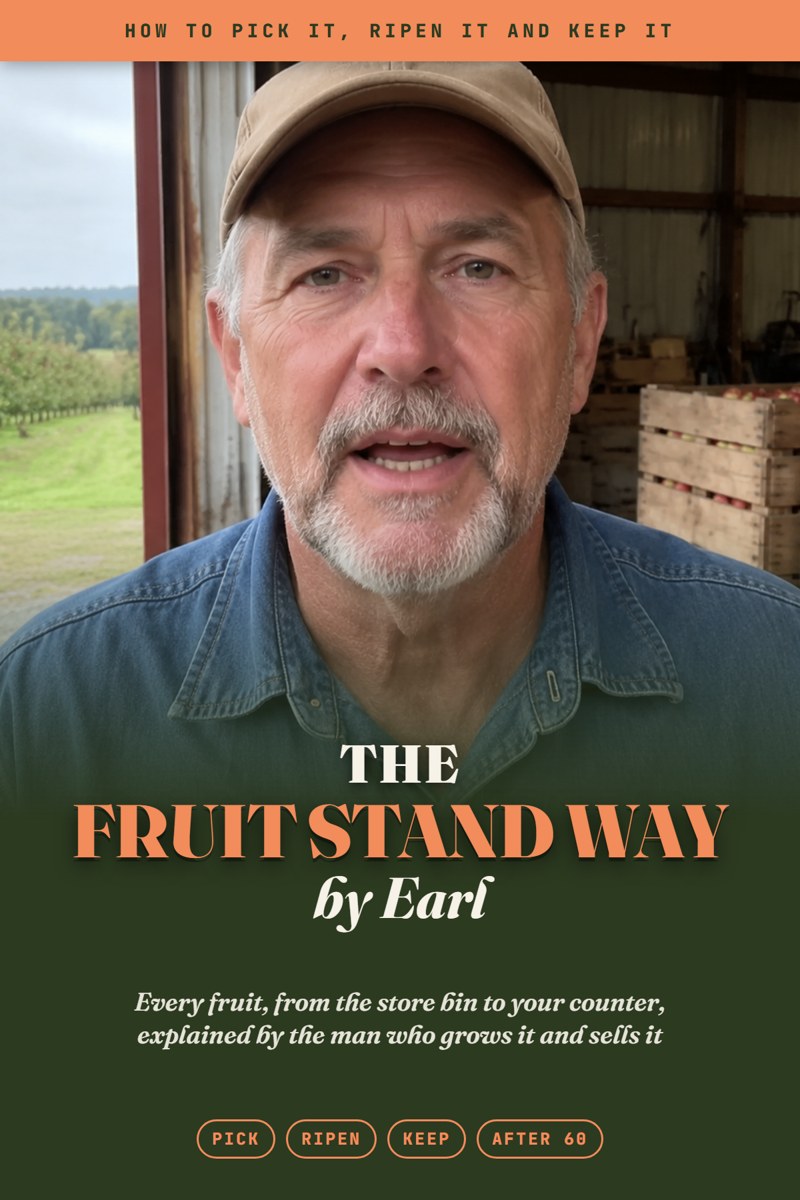
I'm Earl. I've been growing fruit for about forty years and selling it off my own roadside stand. Folks ask me the same things every season: is this one ripe, will it get sweeter if I leave it out, does it go in the fridge, and why does store fruit taste like nothing? This ebook answers all of it, one fruit at a time, with the reasons behind every trick and the numbers from the university postharvest people and the USDA. No brands. No scare stories.

Get the ebook · $27

Ebook: PDF + EPUB, nothing is mailed + 2 free bonuses · instant email delivery

The Fruit Stand Way, by Earl
Free with the book

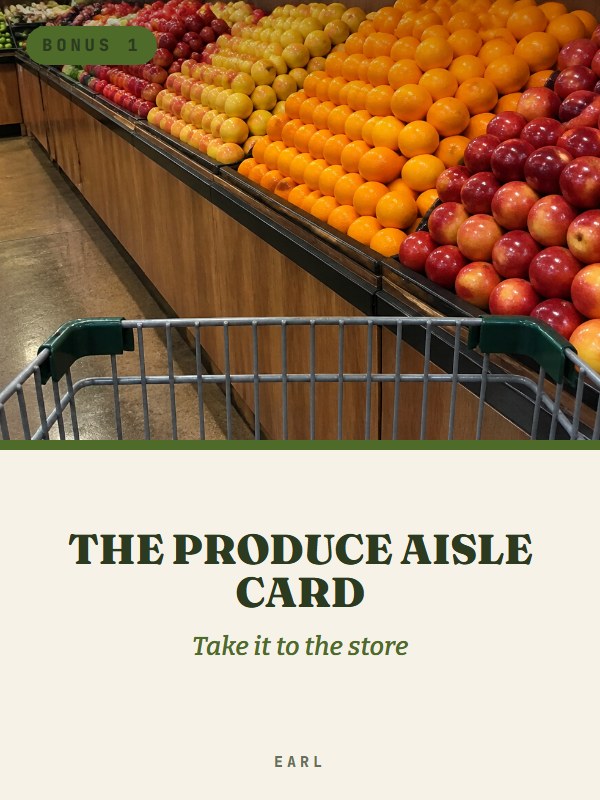
FREEThe Produce Aisle Card
+
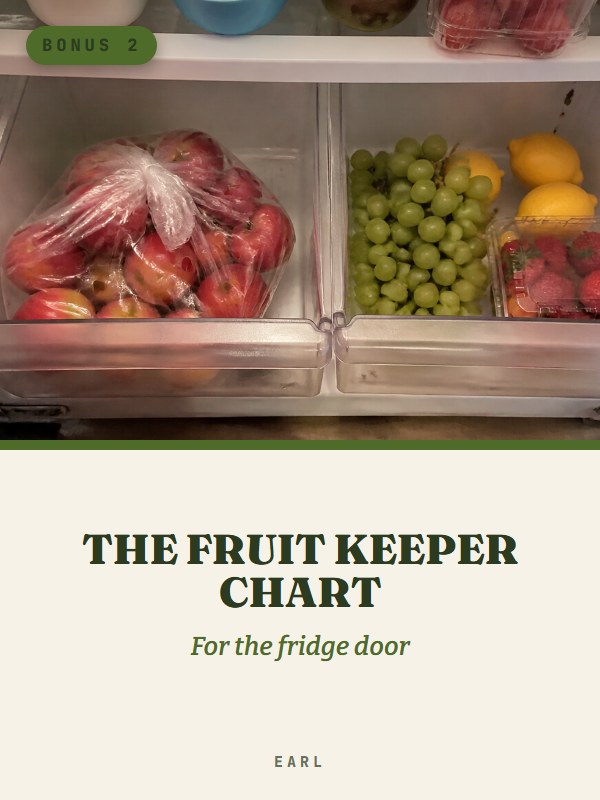
FREEThe Fruit Keeper Chart

Included today, no extra cost

Plus 2 printable bonuses

free $24.

I. The problem

You pay good money for fruit, and too much of it goes mealy, mushy or moldy before you get to it.

Most of that isn't bad luck. It's fruit that went in the wrong place. A strawberry won't get any sweeter after it's picked, and a pineapple won't either, no matter how long it sits on the counter. A hard peach needs the counter first, and the fridge only after. A cantaloupe gets softer and smells better at home, but it doesn't gain sugar. A ripening banana or apple gives off a gas that turns the kiwi next to it soft.

Once you know which fruit keeps ripening and which never will, and which ones to keep apart, you stop throwing money in the trash. That's what this book is for.

"Mature isn't the same as ripe. Most of what goes wrong with fruit starts right there."
II. What's inside

33 chapters. Eight parts. Every fruit you're likely to buy.

Every fruit chapter runs in the same order, so you can use it standing in the produce aisle: how to pick one, whether it ripens at home, counter or fridge, what not to believe, and when it's in season. The numbers come from the University of California's postharvest center, the USDA, university extension services, and for health, the USDA, NIH, CDC and FDA. Not from my memory.

Part 1 · How fruit works (4 chapters)

Mature versus ripe, the fruit that keeps ripening and the fruit that never will, the gas fruit gives off, and the counter, the fridge and the paper bag.

Part 2 · The grocery store (5 chapters)

Why store fruit lets you down, wax, stickers and the organic seal, pesticide residues in their real size and how to wash fruit, buying at a stand, and melons and food safety.

Part 3 · Tree fruit (5 chapters)

Apples, pears, peaches and nectarines, plums and apricots, and cherries.

Part 4 · Berries and grapes (3 chapters)

Strawberries, blueberries, raspberries, blackberries and grapes.

Part 5 · Melons (2 chapters)

Watermelon, cantaloupe and honeydew, and why thumping a melon tells you less than you think.

Part 6 · Citrus and the fruit from far away (7 chapters)

Oranges, mandarins, grapefruit, lemons and limes, bananas, avocados, mangoes, papaya, pineapple, kiwifruit, persimmons, pomegranates and figs.

Part 7 · Fruit after 60 (5 chapters)

How much fruit and what counts, fiber and potassium, juice and dried fruit, food safety, and the medicines that don't mix with grapefruit.

Part 8 · Making it last (2 chapters) and appendices

Freezing fruit at home and nineteen things folks believe about fruit. At the back: when it's in season, where each fruit keeps best, and what to keep apart, ready to print.
III. What this book isn't

Not a scare book. Not medical advice. Not a knock on your grocery store.

I don't grow a single banana or orange, so I buy those at the store like everybody else. This book helps you pick better in that same aisle. When we get to pesticides, wax or food safety, you get the USDA's real numbers and what to do, no panic and no pretending. There isn't a brand name in it. And the chapters on fruit after 60 use numbers from the federal health agencies only, and tell you to ask your doctor or pharmacist when medicines are involved.

How it usually goes
  • Hard peaches straight into the fridge
  • Thumping every watermelon in the bin
  • Waiting for white strawberries to turn red
  • Bananas and kiwis in the same bowl
What this book shows you
  • How to pick each fruit, and why
  • Which ones ripen at home, and which never will
  • Counter, fridge or paper bag, fruit by fruit
  • What to keep apart in the bowl
IV. Who wrote it

A fruit grower who sells what he grows, off his own stand.

I've been growing fruit for about forty years: apples, pears, peaches, cherries, some berries, and melons when it's their turn. And I sell it myself, at my roadside stand, some days right off the tailgate. That means I hear every question there is about fruit, from the folks who buy it.

This book is my answers, written down.

V. The ebook

Pay once. Read it on any device, today.

$49.99$27

$49.99 is the regular price. $27 is the launch price, while the book grows.

This is an ebook, a digital download. Nothing is printed or mailed.

  • 33 chapters in eight parts, plus four appendices to print
  • Plus 2 printable bonuses, free (worth $24)

  • A PDF laid out like a book, and an EPUB for e-readers, tablets and phones
  • Delivered by email right after payment
  • No copy protection, on all your devices
  • Pay once. No subscription.
Get the ebook · $27
VI. Questions

Before you ask

Is this a printed book?

No. It's an ebook: a PDF and an EPUB you download right after you pay. Nothing comes in the mail. The charts at the back and the two bonuses are made to be printed.

I buy all my fruit at the grocery store. Is it still useful?

That's who it's written for. Every fruit chapter tells you what to look for in the store bin, and what to do with it once you get it home.

Will it tell me which brands to buy?

No. There isn't a single brand in it. Varieties, yes, like Honeycrisp or Bartlett, because that's what tells you how a fruit behaves.

Is it medical advice?

No. The chapters on fruit after 60 use numbers from the USDA, NIH, CDC and FDA, and they tell you to ask your doctor or pharmacist about medicines, kidney trouble, diabetes or blood thinners.

What format is it?

A PDF laid out like a printed book, and an EPUB for e-readers, tablets and phones. Both arrive by email right after payment, without copy protection.

What if I don't like it?

Write to me at the address at the bottom of this page within 48 hours of your purchase and you'll get your money back.